
How to Change Career to Personal Training IN 2026
Last Updated 30th June 2026
Changing careers to personal training is highly accessible in 2026. With CIMSPA-accredited Level 2 and 3 qualifications requiring no prior fitness experience, 5-9 month completion timelines, and flexible study options around current employment, career changers from teaching, retail, healthcare, and office work successfully transition into fitness careers every month.
The personal training industry actively welcomes professionals from every background. Former teachers, office workers, retail managers, and healthcare professionals often discover their previous experience provides unexpected advantages over traditionally trained fitness instructors.
This guide explains exactly how to navigate your career change into personal training, addressing the practical concerns, financial realities, and strategic decisions that determine successful transitions in 2026.
Quick Overview: Career Change Essentials
Who this guide is for: Career changers from non-fitness professions considering personal training careers
Typical qualification timeline: 5-9 months with 10-15 hours weekly study whilst working
First-year income expectations: £16,000-£30,000 employed | Variable self-employed (building from zero)
Key decisions: Study pathway (PT Career Accelerator vs PT Essentials) | Employment model (employed vs self-employed) | Specialisation focus (nutrition, corrective exercise, sports performance, pre/post-natal)
Entry requirements: Age 16+ for Level 2 and Level 3 | No formal qualifications needed | No prior fitness experience required
Why Career Change Momentum is Accelerating
Career change into personal training is accelerating due to post-pandemic workplace flexibility demands and sustained fitness industry growth. The fitness sector now employs 145,977 professionals (43.4% increase since 2018), whilst 4 million UK workers have changed careers since the pandemic, prioritising lifestyle quality over traditional progression.
The Post-Pandemic Career Rethink
The CIPD's research reveals that 4 million people have changed careers since the pandemic, with 2 million leaving jobs specifically due to lack of workplace flexibility. This mass career reassessment continues accelerating as workers increasingly prioritise lifestyle quality over traditional career progression.
Personal training offers the flexibility that drove millions to leave their previous roles, whilst providing meaningful work helping others achieve health goals. Career changers consistently report higher job satisfaction after transitioning into fitness careers.
What's Driving Career Change in 2026
What's driving career change in 2026 is meaning, not money. The 2026 Career Shifters State of Career Change Report finds 41% of UK career changers cite work-life balance and wellbeing as a primary motivation, 40% point to values and purpose, and only 30% are driven primarily by pay. UK workers are moving towards careers that align with how they want to live, not just what they want to earn.
The Fitness Industry's Sustained Growth
CIMSPA's 2025 Strategy Update confirms the UK fitness sector now employs 145,977 professionals across 9,453 organisations—a remarkable 43.4% increase since 2018. Industry turnover reached £11.6bn in 2023, representing 33.8% growth over the same period.
ukactive's UK Health & Fitness Market Report 2026 reveals the market generated £6.5bn in total income, up from £5.7bn in 2024, with gym penetration hitting its highest-ever rate of 18%. The sector now serves a record 12.2 million members across 5,842 facilities, recording 679 million individual visits in 2025, up 10% on the previous year. Membership income rose to £5.7bn, up from £5.0bn in 2024, a year-on-year increase of 14%.
This robust market growth ensures career changers enter a thriving sector with genuine long-term prospects.
What Career Changers Bring to Personal Training
Career changers possess valuable transferable skills including professional communication, customer service, and interpersonal abilities that traditional fitness instructors lack. Your decades of experience with career stress, time management, and behaviour psychology create authentic client connections and competitive business advantages that often determine long-term success more than technical exercise knowledge alone.
Professional Skills That Translate Directly
Career changers possess undervalued assets that traditional fitness instructors may lack. A former teacher understands learning progressions and behaviour modification. An ex-retail manager comprehends customer retention and service excellence. Healthcare professionals grasp anatomy and patient-centred care.
These transferable skills prove invaluable when building a personal training business. Clients seeking lifestyle change respond better to trainers who understand career stress, time management challenges, and the psychological barriers to habit formation. this is knowledge acquired through lived experience rather than fitness textbooks.
The Relatability Factor
Career changers excel at working with clients because they understand the genuine challenges of maintaining fitness alongside professional responsibilities, family commitments, and life pressures. You've navigated office jobs, deadline stress, and the difficulty of prioritising health when multiple demands compete for attention.
Fresh Perspective on Fitness Education
Career changers approach fitness education without preconceived notions or outdated methods. You'll learn current, evidence-based practices from day one.
CIMSPA-accredited courses provide comprehensive education covering anatomy, physiology, exercise prescription, and business skills. This systematic education ensures you understand why exercises work, not just how to perform them. Starting fresh with current best practices positions you for success in the UK personal training market.
The Reality of Personal TRAINER Income
Personal trainer income varies significantly by employment model and location. Employed trainers will often be on part-time contracts, earning between £16,000-£30,000 in year one with some employee benefits and stability. Self-employed trainers build from zero but enjoy higher long-term earning potential, typically establishing sustainable income within 12-18 months after reaching 15-25 regular weekly clients.
Employed Personal Trainer Earnings
Indeed UK (as of June 2026, based on 2,900 salaries reported) shows the average UK personal trainer earns £32,613 a year. Geographic location significantly impacts earnings, with London trainers averaging £36,936 according to Indeed salary data.
Self-Employed Personal Trainer Potential
Self-employed personal trainers enjoy higher earning potential than employed positions but accept variable income and business responsibility. Assessment of self-employed earnings proves difficult due to wide variation in client numbers, pricing structures, specialisations, and geographic locations.
The self-employed model requires entrepreneurial mindset and business development skills. You'll manage marketing, client acquisition, retention strategies, and administrative responsibilities alongside training delivery. Career changers with previous business experience can excel as a self employed PT.
What Qualifications Do You Need to Become a Personal Trainer?
You need Level 2 Gym Instructor and Level 3 Personal Trainer qualifications—both CIMSPA-accredited. Many providers combine these into a single course taking 5-9 months with 10-15 hours weekly study. No prior fitness experience needed, no formal education required. Just be 16+ with reasonable health and basic literacy.
Entry Requirements
Level 2 Gym Instructor:
Minimum age: 16 years old
No formal educational qualifications required
Basic literacy and numeracy helpful
Reasonable health to demonstrate exercises safely
No prior fitness experience necessary
Level 3 Personal Trainer:
Minimum age: 16 years old
Valid Level 2 Gym Instructor qualification required
Same health and literacy requirements
No fitness background necessary
What do the Qualifications teach?
Level 2 Certificate in Gym Instructing teaches fundamental exercise science, health screening, and basic programme design. You'll learn to induct gym members, demonstrate equipment safely, and create general fitness programmes for healthy adults. This foundation qualification typically requires 2-5 months.
Level 3 Diploma in Personal Training builds upon Level 2 knowledge, developing sophisticated skills in client assessment, periodised programme design, and business management. You'll conduct comprehensive fitness assessments, design goal-specific programmes, and work with diverse client populations. This advanced qualification typically requires 3-6 months.
If you want a deeper breakdown of how these two qualifications compare, read our guide on the difference between Level 2 Gym Instructor and Level 3 Personal Trainer qualifications
CIMSPA Accreditation Standards
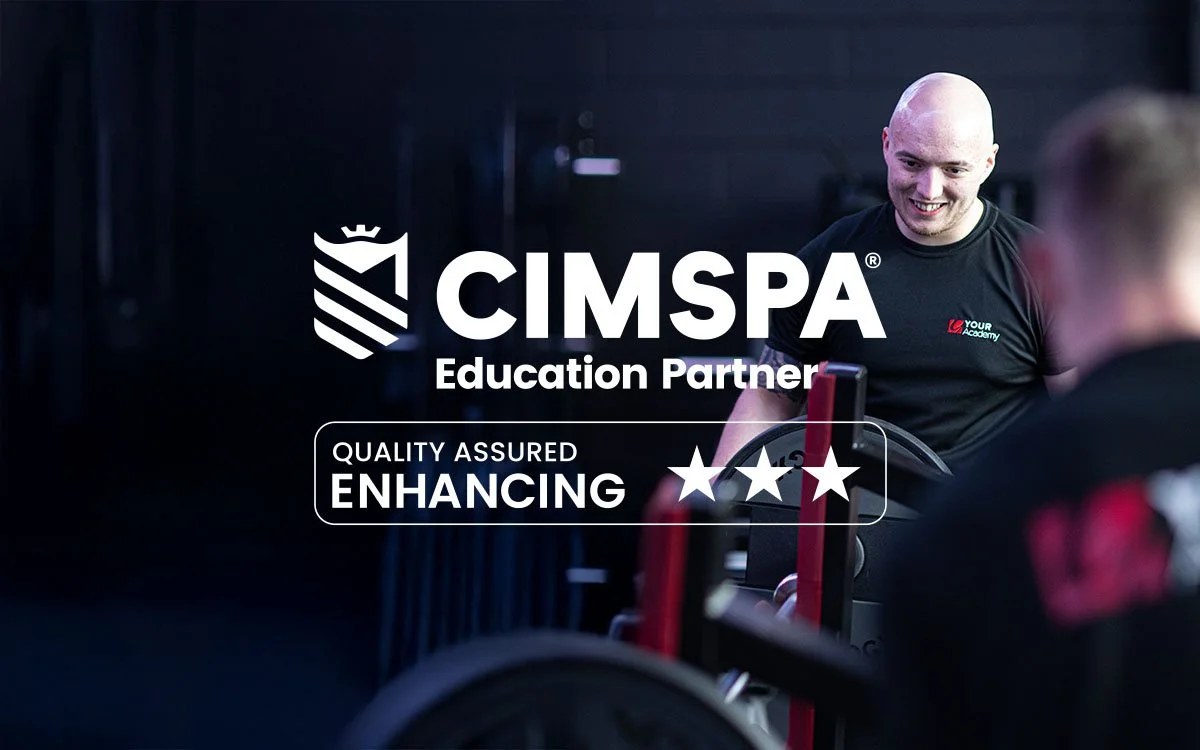
CIMSPA (Chartered Institute for the Management of Sport and Physical Activity) sets UK professional standards for fitness qualifications. CIMSPA-accredited coursesensure employer recognition, insurance provider acceptance, and qualification portability across UK fitness facilities.
YOUR Academy hold CIMSPA Enhancing status, the highest quality mark awarded to education partners for consistently exceeding national training standards, and delivers qualifications through Active IQ, a leading awarding organisation regulated by Ofqual. This ensures your certification meets government-regulated standards and receives recognition from major gym chains, independent studios, and leisure centres nationwide
Realistic Study Timeline
Combined Level 2 and Level 3 courses typically require 5-9 months completion time with 10-15 hours weekly study commitment. This timeline accommodates current employment, allowing career transition without immediate income disruption.
You'll complete online theoretical study at your own pace, plus mandatory face-to-face practical workshops (typically 4-6 days total). This blended approach provides scheduling flexibility whilst ensuring hands-on competence development in professional gym environments.
Should I be employed or self‑employed as a PT?
Employed Personal Trainer Benefits
Employed positions offer financial stability attractive to career changers during transition periods. You'll receive consistent monthly salary, paid holidays, sick pay, pension contributions, and professional development support.
Commercial gyms handle marketing, facility management, and equipment maintenance—allowing focus on client training rather than business operations. This employment structure suits career changers wanting steady income whilst developing coaching skills without entrepreneurial pressure.
However, employed positions typically limit earnings potential and schedule flexibility. Most gyms operate split shifts including early mornings, evenings, and weekends to accommodate member schedules.
The revenue split structure explains why employed earnings remain constrained. Gyms typically retain 40-60% of client session fees, with 50% being standard across major chains. A client paying £40 per session generates £20 for the trainer before deductions. After income tax and National Insurance contributions, your take-home pay per session typically ranges from £13-£19 depending on the gym's pricing structure and the client's package tier. Employed positions rarely permit setting your own rates or creating specialist pricing packages, limiting your ability to increase earnings through premium services or niche expertise.
Self-Employed Personal Trainer Benefits
Self-employment offers higher long-term earning potential and complete schedule control. You'll set your own rates, choose your clients, and build your business according to your vision and lifestyle preferences.
This model requires entrepreneurial mindset and business development skills. You'll manage marketing, client acquisition, retention strategies, and administrative responsibilities alongside training delivery. Career changers with previous business experience often excel in self-employed roles.
The challenge involves variable income, especially during initial business development. Most self-employed trainers require 6-12 months to establish consistent full-time income as their client base develops.
YOUR Personal Training bridges this gap. As the UK's largest personal training management company, YOUR Personal Training provides self-employed trainers with gym access across 420+ locations nationwide, plus business infrastructure including client booking systems, payment processing, and professional support—removing the isolation and uncertainty that typically challenges new self-employed trainers.
For a deeper comparison of both routes, see our full guide on employed vs self-employed personal training for a side-by-side look at earnings, lifestyle and career progression.

Strategic Career Transition Steps
Step 1: Assess Your Commitment
Time requirements: 10-15 hours weekly study over 5-9 months, plus face-to-face workshops
Financial planning: Course costs typically range from £500–£1,500+ depending on provider and pathway, plus professional insurance of around £60–£150+ annually.
Family alignment: Discuss career change plans and timeline expectations with your partner and family.
Step 2: Choose Your Training Pathway
PT Career Accelerator (£500): Guaranteed placement as self-employed personal trainer with YOUR Personal Training's 420+ gym network upon qualification. Includes business training and ongoing mentorship.
PT Essentials (£1,495): Combined Level 2 and Level 3 qualifications with maximum flexibility and specialisation options. £250 deposit with 0% interest payment plans (6, 9, or 12 months). No hidden fees.
Step 3: Begin Systematic Education
Quality personal training education combines online theoretical study with mandatory practical workshops. YOUR Academy's blended learning approach provides scheduling flexibility whilst ensuring hands-on competence development.
Face-to-face practical sessions in professional gym environments build genuine confidence working with equipment and clients. Expert mentorship provides personalised feedback throughout the learning journey.
Step 4: Develop Business Competence
Technical exercise knowledge alone doesn't guarantee personal training success. Business skills including marketing, client communication, pricing strategy, and retention systems prove equally important—areas where career changers often possess significant advantages.
YOUR Academy integrates business education throughout qualification programmes rather than treating it as afterthought. You'll learn client consultation techniques, pricing strategies, and retention systems alongside exercise prescription and programme design.
YOUR Personal Training provides comprehensive business support to all trainers in their network, including their Advanced Business course. YOUR Academy graduates receive free access to this course, which covers client acquisition, pricing psychology, package structuring and client retention.
Why Career Changers CAN Succeed as Personal Trainers
Career changers frequently outperform younger trainers due to professional maturity, realistic business expectations, and superior soft skills developed through years of career experience. Your understanding of customer service excellence, systematic business processes, and long-term relationship building creates competitive advantages in client retention and business development.
Professional Maturity Advantage
You bring a level of professional maturity that many new trainers lack. Workplace professionalism, punctuality, communication standards, and customer service excellence are already familiar—basics that distinguish successful businesses from mediocre operations. This professionalism creates client trust and confidence, and people respond better to trainers who behave like established professionals rather than enthusiastic amateurs still developing business competence.
Business Acumen From Previous Careers
Many people transitioning into personal training already understand business fundamentals through prior roles. Former retail managers grasp customer retention strategies, ex‑sales professionals excel at client acquisition, and healthcare workers understand patient care and communication. These skills transfer directly into personal training business success, helping you implement systematic processes, track key metrics, and make strategic decisions more effectively than trainers without professional business experience.
Realistic Expectation Advantage
You typically bring more realistic expectations about business development timelines and market challenges. Years in other careers have shown that building anything worthwhile requires time, consistent effort, and thoughtful decision-making. Younger trainers often expect immediate success, becoming discouraged when client acquisition proves challenging, whereas your professional experience provides perspective and resilience that sustains you through the inevitable challenges of early career development.
Frequently Asked Questions
Can I complete my qualification whilst working full-time?
Yes. Most career changers complete qualifications whilst maintaining current employment through flexible online study plus scheduled weekend workshops. The 5-9 month completion timeline accommodates gradual transition without immediate income disruption.
YOUR Academy's blended learning approach combines self-paced theoretical study with mandatory face-to-face practical sessions (typically 4-6 days total), allowing study around existing work commitments.
What salary can I realistically expect in my first year?
Employed personal trainers typically earn £16,000-£30,000 in their first year depending on location and hours worked. Self-employed trainers build from zero, typically establishing consistent income within 6-12 months as their client base develops.
Geographic location substantially impacts income, with London trainers earning 10-15% above national averages. Entry-level employed positions offer stability; self-employment offers higher long-term potential but variable income initially.
Do I need to be in excellent physical condition myself?
No. Personal training qualifications don't require athletic ability or exceptional fitness levels. You need reasonable health to demonstrate exercises safely.
Clients often prefer trainers who understand genuine fitness struggles over naturally athletic individuals. Your relatability, knowledge, and coaching skills matter more than personal physical appearance or performance abilities.
How long before I can start earning as a personal trainer?
You can begin earning immediately upon qualification completion (typically 5-9 months after starting). The PT Career Accelerator provides guaranteed gym placement upon qualification, enabling immediate income generation.
Self-employed paths require additional time for client base development—typically 2-4 months to establish consistent weekly income after qualification.
What ongoing costs should I budget for?
Self-employed trainers face business expenses including professional indemnity insurance (£60-£150+ annually), gym rental fees (varying by location), and continuing professional development courses.
Employed positions typically cover insurance and facility costs, reducing individual financial burden significantly.
Will my previous career experience actually help?
Absolutely. Former teachers excel at instruction and behaviour modification. Retail managers understand customer service. Healthcare professionals grasp anatomy and patient care.
These transferable skills help you build and retain clients more effectively than trainers without professional experience. Your soft skills often determine long-term success more than technical exercise knowledge alone.

Taking Your First Step Towards Career Change
Changing careers to personal training represents one of the UK's most accessible professional transitions. With 4 million Brits having changed careers since the pandemic and the fitness industry growing 43.4% since 2018, opportunity abounds for qualified professionals entering the sector.
Your fresh perspective, structured education, and previous career experience provide strong foundations for long-term success. The fitness industry needs qualified professionals who understand real-world challenges and can relate to clients beginning their own health journeys.
Book a consultation with YOUR Academy to discuss your specific situation and create a personalised learning plan, or explore our PT Career Accelerator and PT Essentials personal training courses.
About YOUR Academy
We specialise in transforming career changers into successful personal trainers. Our CIMSPA Enhancing Status confirms exceptional teaching standards held by a select few UK providers. Our graduates now run thriving fitness careers after beginning as complete industry newcomers.
